The age of a head coach can significantly influence a college football program, and Notre Dame is no exception. As one of the most storied institutions in the sport, the Fighting Irish often find themselves under the spotlight, not just for their performance on the field but also for the leadership guiding the team. Understanding the age of Notre Dame’s head coach offers insights into their experience, coaching style, and potential longevity in a high-pressure environment.
Coaches bring unique perspectives shaped by their years in the game. Whether young and innovative or seasoned and traditional, their age can impact recruitment, player development, and overall team dynamics. As fans and analysts keep a close eye on the program, the age of the head coach remains a crucial factor in assessing the future trajectory of Notre Dame football.
Overview of Notre Dame Head Coaches
Notre Dame has a storied history of head coaches, each contributing a unique set of skills and experiences shaped by their age. Coaches at Notre Dame range from young innovators to seasoned veterans, with ages typically spanning from the early 30s to the late 60s.
| Coach Name | Age at Appointment | Tenure Duration | Notable Achievements |
|---|---|---|---|
| Knute Rockne | 35 | 13 years | 105 wins, 12 consensus All-Americans |
| Lou Holtz | 45 | 11 years | 1988 National Championship, 100+ wins |
| Charlie Weis | 49 | 5 years | BCS title game appearance |
| Brian Kelly | 49 | 12 years | Multiple BCS appearances |
| Marcus Freeman | 36 | Ongoing | Youngest head coach in recent history |
Youthful coaches often bring fresh ideas and a modern coaching approach, energizing recruitment efforts and fostering a contemporary team culture. In contrast, experienced coaches leverage their extensive knowledge, enhancing player development and maintaining stability within the program.
Fan and analyst perspectives vary based on the coach’s age, as each generation fills distinct roles within the team’s structure. The age of the head coach thus serves as a critical component in shaping the future of Notre Dame football.
Current Head Coach and Their Background
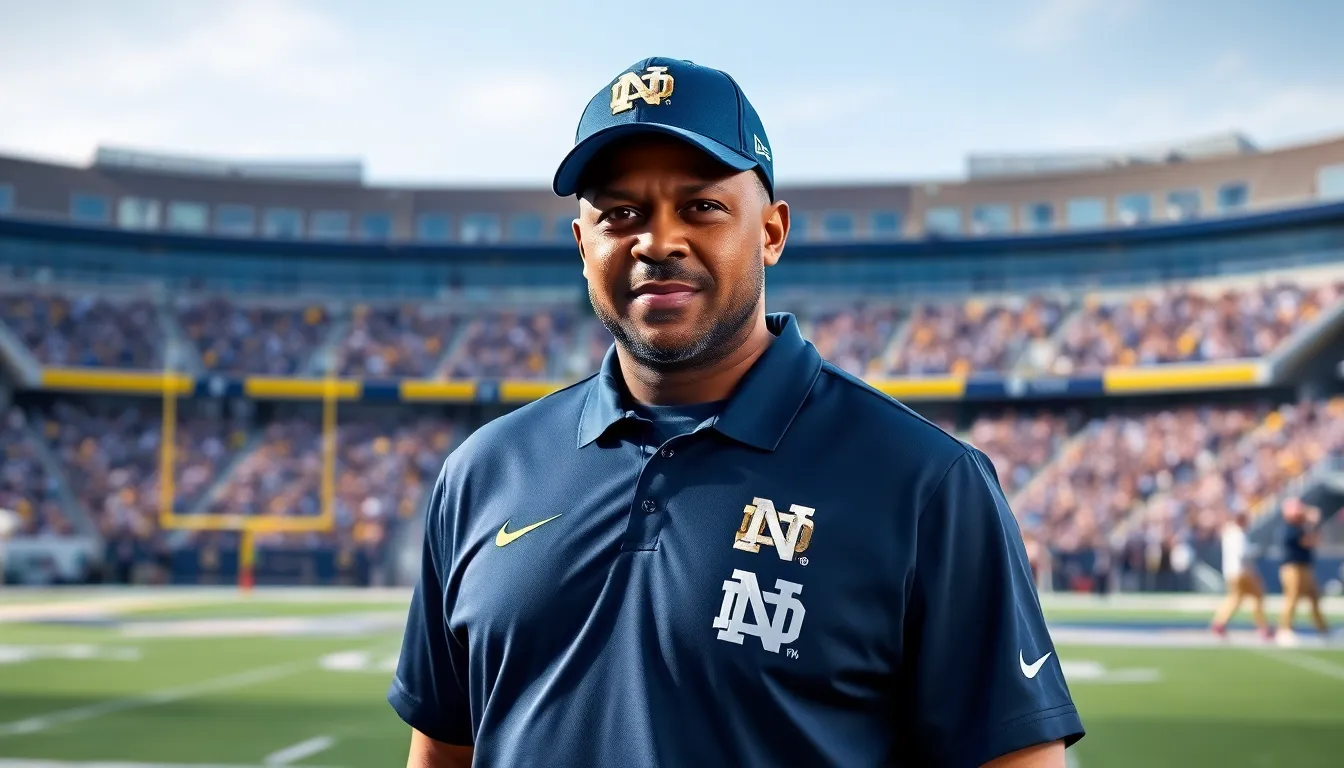
Marcus Freeman, the current head coach of Notre Dame, brings a dynamic blend of youth and experience to the program. His approach to coaching reflects both his educational background and significant milestones throughout his career.
Early Life and Education
Marcus Freeman was born on January 10, 1986, in Huber Heights, Ohio. He excelled in athletics during high school, particularly in football. Following high school, Freeman attended the University of Ohio State, where he played linebacker for the Buckeyes from 2004 to 2008. His education in communications paved the way for his future coaching roles, equipping him with strong interpersonal skills that benefit player development.
Coaching Career Milestones
Freeman’s coaching career began at his alma mater, where he served as a graduate assistant in 2010. Notable milestones include:
- 2011-2013: Defensive staff member at Purdue University, honing his skills and knowledge of the game.
- 2017-2020: Defensive coordinator at the University of Cincinnati, leading the Bearcats to national recognition.
- 2021: Joined Notre Dame as defensive coordinator, helping the team secure a top-tier defensive ranking.
In December 2021, Freeman became the head coach of Notre Dame, becoming the youngest coach in the program’s history at 35 years old. His coaching style emphasizes defensive strategy and player empowerment, making an immediate impact on the team.
Age Comparison with Previous Coaches
Marcus Freeman, at 35 years, leads a notable shift in age among Notre Dame head coaches. Previous head coaches exhibited a wide age range, influencing coaching philosophies and team dynamics.
- Knute Rockne: Became head coach at age 34 in 1918, introduced innovative coaching techniques and emphasized speed and strategy.
- Lou Holtz: Took the helm at age 45 in 1986, known for motivational charisma and fostering team unity, leading to a national championship.
- Charlie Weis: Assumed the role at age 48 in 2005, focused on offensive schemes, ultimately compiling a mixed record during his tenure.
- Brian Kelly: Joined Notre Dame at age 49 in 2010, brought a disciplined approach and achieved a national championship appearance.
The comparative youth of Freeman contrasts sharply with many predecessors, positioning him to bring contemporary ideas to a storied program. His age allows for rapport with younger players, enhancing recruitment and engagement. The varied ages of past coaches reflect differing strategies, demonstrating that age can affect a coach’s impact on the team’s performance and culture.
Impact of Age on Coaching Performance
Age significantly affects coaching performance, shaping experience, leadership style, and team dynamics. Younger coaches often employ innovative tactics and adapt quickly to evolving game trends. They introduce modern approaches, which resonate well with younger players and enhance recruitment efforts. A youthful mindset fosters trust and relatability, promoting strong relationships between coaches and athletes.
Conversely, older coaches bring invaluable experience and stability. Their deep understanding of the game facilitates strategic decision-making during high-pressure situations. Seasoned coaches often excel in mentoring, transferring knowledge to young athletes while fostering team cohesion. The combination of experience and wisdom can prove essential for long-term program success, as they navigate the challenges that arise over a season.
Marcus Freeman’s appointment as head coach exemplifies the impact of age on coaching. At just 35, he embodies a blend of youthful energy and professional knowledge. His background allows him to connect with players while implementing effective defensive strategies. This intersection of youthful enthusiasm and experience results in a dynamic coaching style that can bridge generational gaps within the team.
Analyzing the historical ages of Notre Dame head coaches reveals the evolving role of age in coaching performance. Coaches like Knute Rockne and Lou Holtz, while differing in age, each significantly impacted the program’s success through unique approaches. As coaching ages shift, the ideals surrounding age and its role in effective leadership continue to evolve, influencing prospective coaches and the future of college football alike.
Future Prospects for the Program
Future prospects for the Notre Dame football program hinge on the age and leadership of Marcus Freeman. His young age allows him to forge strong connections with players and adapt to the fast-paced nature of college football. His innovative approaches can revitalize recruitment strategies, attract top talent, and engage the team’s younger players effectively.
Freeman emphasizes a player-centric coaching style, which builds trust and fosters strong relationships. This focus on empowerment may lead to improved player performance on the field and create a positive culture within the program. His prior experience as a defensive coordinator aids in constructing robust defenses, which can position Notre Dame competitively in the highly-ranked college football landscape.
The historical context of Notre Dame’s head coaches informs the program’s future trajectory. Successful coaching strategies stem from balancing youth and experience. Freeman’s youthful perspective complements the wisdom gained from predecessors, potentially allowing him to leverage modern techniques while incorporating time-tested methods.
Gaining stability among the coaching staff and consistency in leadership is vital for the program’s progression. If Freeman continues to attract and retain talented assistants, the team’s overall effectiveness may enhance, leading to better results on the field. The collaborative environment among coaches can foster growth and innovation in practice regimes and game-day strategies.
In addition, the evolving landscape of college football presents challenges and opportunities. Changes in recruitment processes, including transfer portals and NIL deals, require adaptive coaching strategies. Freeman’s ability to navigate this dynamic climate will greatly influence the program’s success.
Overall, the future of the Notre Dame football program looks promising under Freeman’s leadership. His combination of youthful energy, strategic thinking, and commitment to player development poise the program for continued success in the coming years.
The age of a head coach at Notre Dame plays a pivotal role in shaping the football program’s future. Marcus Freeman’s youthful perspective brings a fresh approach to coaching while maintaining a solid foundation of experience. His ability to connect with players and adapt to the evolving landscape of college football positions Notre Dame for ongoing success.
As the program continues to navigate challenges in recruitment and team dynamics, Freeman’s blend of energy and strategic insight will be essential. The historical context of the program suggests that a diverse range of coaching ages can yield significant benefits. With Freeman at the helm, Notre Dame is poised to thrive in both performance and culture in the years ahead.